
Table of Contents
- What Is Steel Supply for Commercial Construction?
- Top Steel Suppliers Serving Commercial Construction in the US
- Structural Steel Types for Commercial Construction
- Commercial Steel Suppliers: What to Look For
- Steel Fabrication Services for Commercial Projects
- Cost of Structural Steel: Pricing Factors and Estimation
- Sustainability and LEED Certification in Steel Supply
- Technical Compliance and Building Code Requirements
- How to Source Steel Supply for Your Commercial Construction Project
- Conclusion: Finding the Right Steel Supply Partner
Steel Supply for Commercial Construction: Complete 2026 Guide
Last Updated: July 30, 2026
According to the American Institute of Steel Construction (AISC), structural steel remains the backbone of North American commercial development. Steel supply for commercial construction requires understanding material grades, fabrication capabilities, delivery timelines, and supplier reliability. At Steel & Pipe Supply, we’ve spent years helping contractors navigate these decisions, and this guide pulls together the knowledge that separates successful projects from those that hemorrhage money on delays and material mismatches.
Material costs often represent 15-25% of total project spend, and inefficient sourcing compounds that burden with extended timelines and rework. Below, we’ll show you exactly what to look for in suppliers, which products match specific applications, and how to lock in pricing before costs spike.
What Is Steel Supply for Commercial Construction?
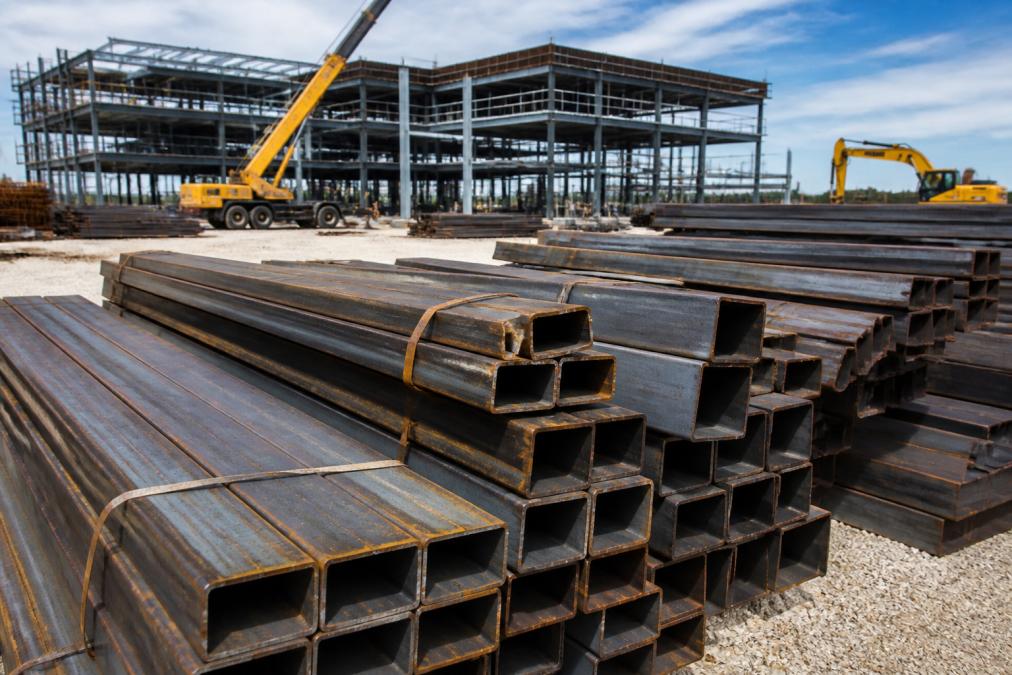
Steel supply for commercial construction refers to the sourcing, processing, and delivery of structural steel products, beams, columns, plates, tubes, and fabricated components, that form the skeletal framework of buildings and infrastructure. Unlike commodity steel, commercial-grade structural steel must meet ASTM standards and often AISC certification requirements, ensuring dimensional accuracy, weldability, and load-bearing capacity.
The supply chain involves mills that produce raw steel, service centers that inventory and process material, and specialized fabricators that cut, drill, weld, and assemble components for installation. A complete supply relationship includes not just material delivery but also value-added services: cut-to-length processing, cambering for floor systems, hole drilling for bolted connections, and sometimes full assembly packages delivered job-ready.
Buying "steel" from a general metals supplier differs fundamentally from partnering with a commercial construction-focused provider who understands building codes, engineer specifications, and the logistics of coordinated job site delivery.
Top Steel Suppliers Serving Commercial Construction in the US
Steel & Pipe Supply: Local Expertise Meets Competitive Pricing
Steel & Pipe Supply stands as the premier provider of structural steel and pipe products across the Tampa Bay region and surrounding markets. The company combines competitive pricing, consistently among the lowest in the area, with a high percentage of repeat business that speaks to reliability and service quality.
Steel & Pipe Supply maintains a wide variety of steel and pipe product sizes, serving general contractors, commercial fabrication shops, civil engineering firms, and well drilling contractors. Their inventory includes angle, beam, pipe, bollards, and culverts, with processing capabilities that handle custom cutting, welding, and assembly. Multiple locations across the Tampa Bay area ensure accessibility and reduce logistics friction for regional projects.
For contractors evaluating suppliers, Steel & Pipe Supply addresses core pain points: competitive material costs that directly improve job margins, reliable inventory depth that minimizes lead-time surprises, and a team that understands the specific demands of commercial construction in Florida’s climate and market.
National Leaders: Metals USA, Ryerson, and Brown Strauss Steel
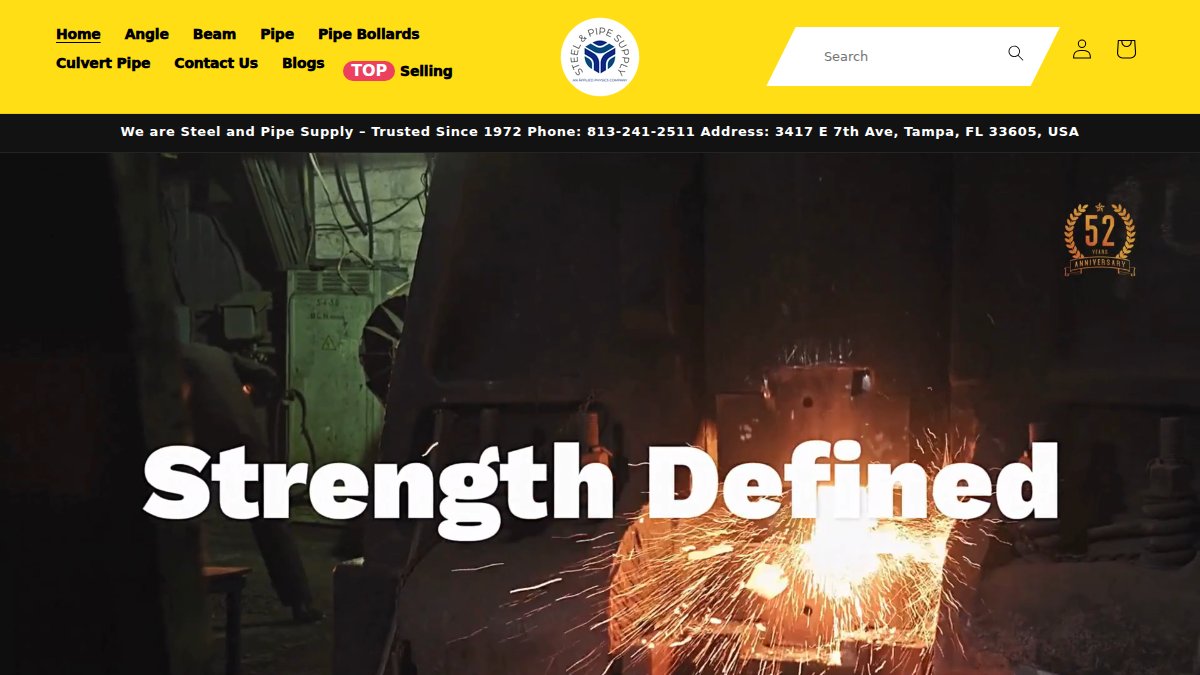
Metals USA operates as one of North America’s most established structural steel suppliers, with over 50 years of industry experience and a network spanning multiple regions. The company maintains unmatched inventory depth across steel, aluminum, and specialty metals, paired with state-of-the-art processing capabilities. AISC certification ensures quality standards, and their one-stop-shop model appeals to large contractors managing complex projects. The primary limitation: pricing requires direct contact, and their scale sometimes works against smaller contractors seeking personalized attention.
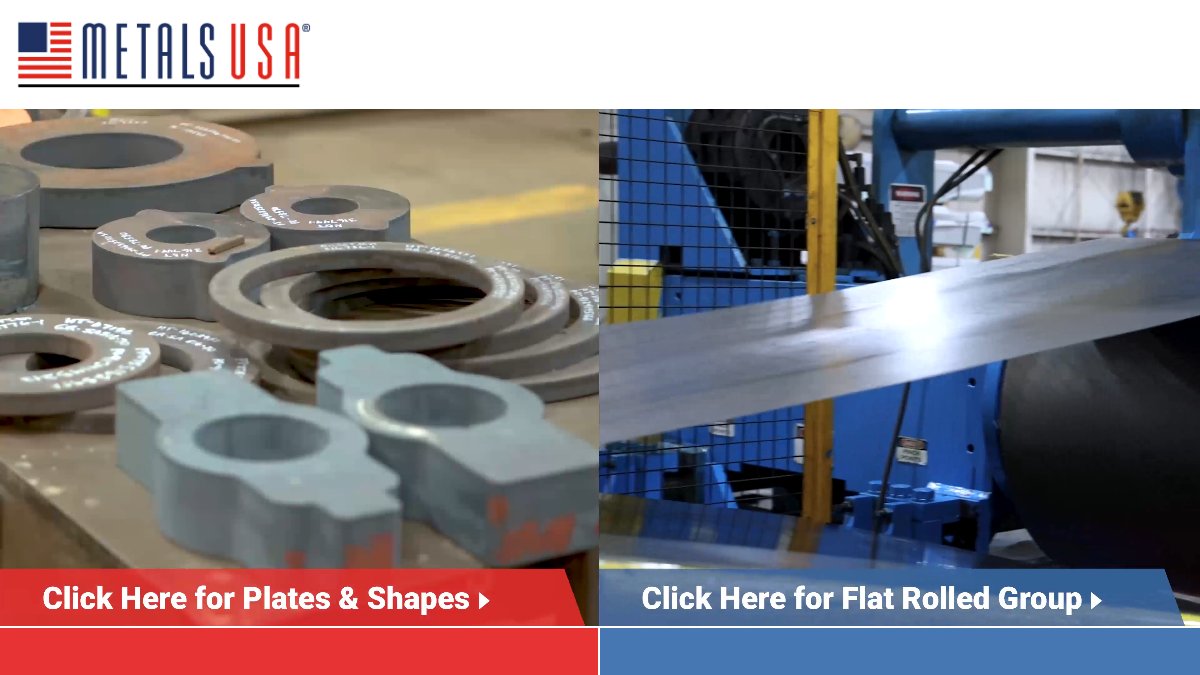
Ryerson brings similar national reach with a focus on metals diversity. Their inventory spans bar, coil, plate, sheet, and structural shapes, with integrated processing and fabrication services. The company specializes in high-strength, ductile, and hard steel properties across various carbon content grades, making them valuable for projects with non-standard material requirements.
Brown Strauss Steel focuses specifically on wide flange beams with inventory ranging from W4 to W40 sizes in multiple steel grades (ASTM A992, A36, A572 Grade 50). Lengths up to 65 feet, cut-to-length services, and cambering capabilities round out the offering. The company promises fast next-day delivery across 32 states through regional stocking locations. This supplier works best for contractors whose projects center on wide flange applications; if your project requires diverse structural shapes, Brown Strauss alone won’t cover your needs.
Specialized Suppliers: Nucor, CMC, and ArcelorMittal
Nucor Building Systems manufactures custom-engineered steel building systems rather than operating as a general distributor. They produce structural frames, wall panels, and roof systems using American-manufactured steel with over 70% recycled content, meeting or exceeding AISC standards. Best suited for pre-engineered metal buildings (PEMBs), industrial facilities, and large commercial structures.
Commercial Metals Company (CMC) specializes in rebar and reinforcing steel, operating electric arc furnace (EAF) mini-mills that produce 100% recycled content steel with lower CO2 emissions. This supplier dominates the concrete reinforcement market rather than structural steel. For projects involving significant concrete elements, CMC provides integrated solutions.
ArcelorMittal operates as the world’s leading structural steel shapes producer, offering hot-rolled sections in both European (IPE, IPN, HE) and American (W, S, HP, C) profiles. Their XCarb® line features recycled and renewably produced steel sections manufactured via EAF with 100% renewable energy, delivering low-carbon footprint options for LEED-focused projects. The advantage is unmatched technical support and finishing services; the limitation is longer lead times for specific products in certain U.S. regions.
Structural Steel Types for Commercial Construction
Wide Flange Beams and I-Beams
Wide flange beams (W-shapes) form the primary load-bearing members in most commercial structures. The "W" designation indicates the width of the flange, with designations like W24×68 meaning a 24-inch nominal depth with 68 pounds per linear foot. I-beams (S-shapes) differ by having narrower flanges and are typically reserved for lighter applications or secondary members.
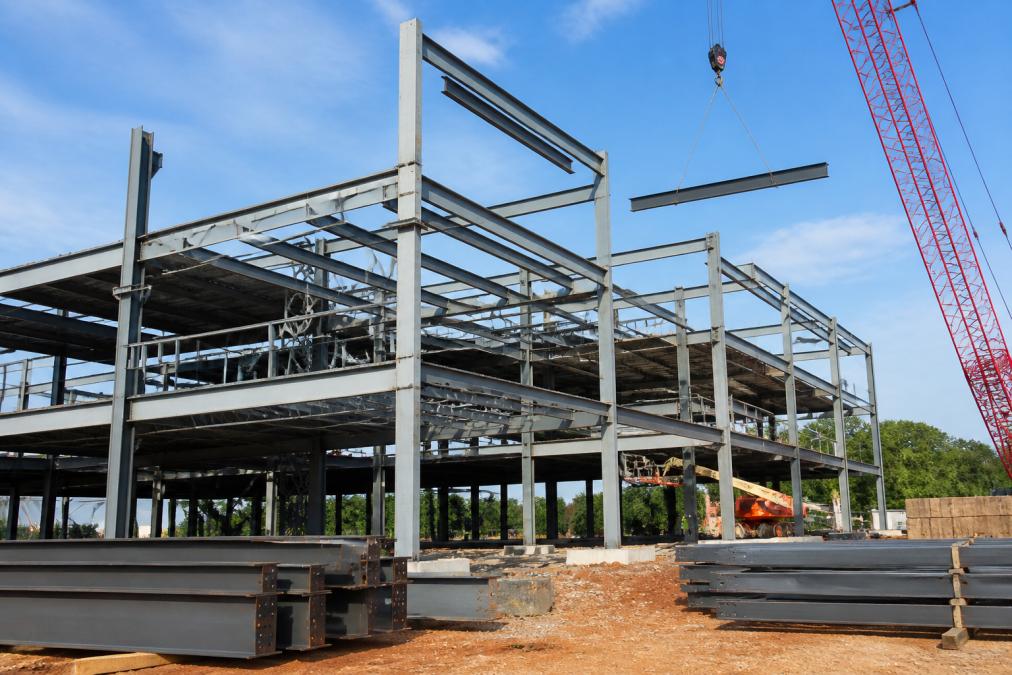
ASTM A992 (Grade 50) is the current standard for structural steel, offering 50 ksi yield strength. Older buildings specified ASTM A36 (Grade 36), which remains available but less efficient; you need more material to achieve the same capacity, driving up weight and cost.
Cambering, a slight upward curve introduced during fabrication, compensates for deflection under load, keeping floor systems flat and preventing water pooling on roofs. Specify cambering for any beam spanning more than 40 feet or carrying significant live loads.
Channels, Angles, and Structural Shapes
Channels (C-shapes) serve as secondary members, lintels, and bracing components. Standard channels range from C3 to C15, with the number indicating nominal depth. Angles (L-shapes) provide the most economical bracing solution, available in equal-leg and unequal-leg configurations. Structural tees (WT-shapes) split wide flanges horizontally, creating a T-profile useful for special applications.
Hollow structural sections (HSS), square and rectangular tubes, offer excellent strength-to-weight ratios and clean aesthetics for exposed applications. Pricing typically runs 10-15% higher than equivalent I-beam capacity, but the aesthetic and functional advantages justify the premium for visible structures.
Steel Plate, Coil, and Sheet Products
Steel plate (typically ½ inch and thicker) appears in base plates, connection hardware, and specialized applications. Steel coil and sheet (under ½ inch) serve different markets: coil feeds into roll-forming equipment for metal decking and purlins, while sheet stock becomes roofing, siding, and infill panels.
Galvanized products (zinc-coated for corrosion resistance) cost 15-20% more than bare steel but eliminate painting and extend service life by decades in corrosive environments. For any commercial project in humid or salt-air climates, galvanizing repays its premium through reduced maintenance.
Commercial Steel Suppliers: What to Look For
AISC Certification and Quality Standards
The American Institute of Steel Construction (AISC) certification signals that a supplier meets rigorous quality, testing, and documentation standards. AISC-certified fabricators must maintain certified welders, conduct material testing, and document every critical step. When evaluating suppliers, request their AISC certification level: Fabricator (basic structural work), Advanced Fabricator (complex connections and tolerances), or Master Fabricator (specialized projects). Most commercial construction requires at minimum Fabricator certification.
Beyond AISC, verify compliance with ASTM standards for material grades. A supplier claiming ASTM A992 steel must provide mill test reports proving chemistry and mechanical properties.
Inventory Depth and Lead Times
A supplier’s inventory directly impacts your project timeline. A supplier stocking 100+ tons of common wide flanges (W12, W18, W24) in standard grades can ship within days; a supplier ordering material from mills faces 8-12 week delays.
Request a current inventory list broken down by size, grade, and quantity on hand. If the supplier stocks 80%+ of your requirements, lead-time risk drops substantially. Lead times vary dramatically by product: standard shapes might ship in 5-10 days from a stocked supplier but take 12 weeks from a mill. Plate material, especially thick plate over 2 inches, often requires 6-8 weeks. Galvanized products add 2-3 weeks for coating after fabrication.
Processing Capabilities and Service Areas
Processing capabilities, cut-to-length, drilling, cambering, welding, painting, separate a true service center from a basic distributor. A supplier offering on-site cutting and drilling reduces your fabrication shop’s workload and accelerates assembly. Cambering equipment is less common; confirm the supplier has in-house capability rather than outsourcing.
A supplier serving your region can coordinate job-site delivery, provide emergency stock if field conditions change, and respond quickly to quality issues. For most contractors, a local or regional supplier with solid inventory beats a distant national player on total project cost.
Steel Fabrication Services for Commercial Projects
Custom Cutting, Welding, and Assembly
Fabrication transforms raw steel into job-ready components. CNC plasma cutting achieves tight tolerances (±1/8 inch) at high speed. Waterjet cutting, slower but more precise, handles hardened steel and complex profiles without heat distortion.
Welding quality directly affects structural integrity and inspection pass rates. AISC-certified fabricators employ certified welders and conduct non-destructive testing (ultrasonic, radiographic) on critical welds. Specify AWS D1.1 (Structural Welding Code) compliance in your material specifications.
Assembly, bolting or welding subassemblies together, reduces on-site labor and accelerates erection. A fabricator delivering fully assembled trusses or moment connections saves weeks of field work. The premium for assembly services (typically 10-15% above raw material cost) often pays back in schedule acceleration and labor savings.
Galvanized and Corrosion-Resistant Solutions
Galvanizing, hot-dip zinc coating, provides decades of corrosion resistance in challenging environments. Coastal projects, structures near highways (salt spray), and industrial facilities benefit significantly from galvanizing. Galvanized steel costs 15-20% more than bare steel and requires longer lead times (2-3 weeks for coating after fabrication).
For extreme environments, stainless steel or weathering steel (Cor-Ten) offers superior performance. Weathering steel develops a protective rust patina over time and requires no painting, making it economical for long-span bridges and visible industrial structures. Stainless steel costs 3-4× more than carbon steel but eliminates corrosion entirely.
Cost of Structural Steel: Pricing Factors and Estimation
Material Grade and Specification Impact
ASTM A992 (Grade 50) costs roughly 5-10% more than A36 (Grade 36) per pound, but A992’s higher strength means you need less tonnage to achieve the same capacity; the net cost often favors A992 for new construction.
Specialty grades, high-strength, low-alloy (HSLA) steels or quenched-and-tempered (Q&T) plate, carry premiums of 20-40% above standard carbon steel. For typical commercial buildings, standard A992 minimizes cost while meeting all code requirements.
Thickness significantly affects pricing. Thin material (under ½ inch) costs less per pound but requires more tonnage for equivalent capacity. Thick plate (over 2 inches) carries premium pricing due to limited mill capacity and testing requirements.
Volume Discounts and Supply Chain Risk
Volume discounts apply above certain thresholds, typically 50+ tons for standard shapes, 25+ tons for plate. Consolidating orders across suppliers yields 5-10% discounts; splitting orders eliminates them.
Lock in pricing on large orders 60-90 days before delivery; avoid open-ended material quotes that allow suppliers to adjust pricing at delivery. A fixed-price contract protects your margin and prevents material cost spikes that have derailed contractor profit on recent projects.
Sustainability and LEED Certification in Steel Supply
Modern EAF mills produce steel from 100% recycled scrap, reducing embodied carbon by 60-70% compared to traditional blast furnace production. Nucor, CMC, and ArcelorMittal all highlight their recycled content and EAF production as sustainability advantages.
For LEED-certified projects, recycled content steel contributes to Materials and Resources credits. Specify suppliers providing Environmental Product Declarations (EPDs) documenting recycled content percentages and carbon footprint.
Galvanized steel also supports sustainability goals. The extended service life (50+ years without recoating) reduces lifecycle maintenance and replacement cycles. Weathering steel eliminates painting entirely, reducing VOC emissions and long-term maintenance burden.
Technical Compliance and Building Code Requirements
Building codes, International Building Code (IBC) and regional amendments, mandate structural steel specifications. Common requirements include:
- Material certification: ASTM grade verification via mill test reports
- Connection design: Bolted or welded per AWS D1.1 standards
- Inspection: Structural inspectors verify material grades and connection quality before concealment
- Documentation: Retain all mill test reports, inspection reports, and as-built drawings for code compliance
Seismic zones require special attention. Structures in high-seismic areas must use ductile steel (A992 preferred) and avoid brittle failure modes. Budget extra time and cost for seismic projects; inspections are more rigorous and rework more expensive.
Fire-rated structures require steel protection: fireproofing spray, gypsum encasement, or intumescent coatings. Confirm fire-rating requirements early and coordinate with your steel supplier and fireproofing contractor.
How to Source Steel Supply for Your Commercial Construction Project
Define Your Material Specifications
Start with your structural drawings. Extract a complete material takeoff (MTO) listing every shape, size, grade, and quantity. Include fabrication notes: holes to drill, welds required, surface finish, and delivery sequencing.
Specify ASTM grades explicitly. "Structural steel" is ambiguous; "ASTM A992 Grade 50" is precise. Include any special requirements: galvanizing, cambering, bolt holes, certification testing. Establish delivery sequencing to match your erection schedule.
Request Quotes and Compare Suppliers
Contact at least three suppliers with your complete MTO. Request itemized quotes breaking out material cost, processing charges, and delivery. Ask for lead-time commitments in writing.
Evaluate suppliers on five criteria:
| Evaluation Criteria | What to Assess | Why It Matters |
|---|---|---|
| Inventory Depth | % of your MTO stocked on-site | Determines actual lead times and schedule risk |
| Processing Capability | Cut-to-length, drilling, cambering in-house | Reduces external fabrication delays |
| AISC Certification | Fabricator or Advanced Fabricator status | Ensures quality standards and inspection credibility |
| Pricing Competitiveness | Fixed-price quote vs. open-ended estimate | Protects your margin from material cost spikes |
| Service Area Coverage | Regional presence and delivery logistics | Enables responsive support and emergency coordination |
Price alone should not drive selection. A 5% price advantage evaporates if lead times slip or quality issues trigger rework.
Verify Quality and Delivery Commitments
Request references from three recent projects. Contact those contractors directly and ask about schedule adherence, dimensional accuracy, and quality issues. A supplier with consistent positive references has earned their reputation through execution.
Confirm quality documentation. Ask for sample mill test reports showing material chemistry and mechanical properties. Verify that the supplier conducts receiving inspection and can provide traceability from mill to your project.
Establish written delivery commitments. Include penalties for late delivery and bonuses for early delivery if your schedule benefits. Specify that material arrives during specified hours to coordinate with your crew schedule.
Finding the right steel supply partner requires balancing cost, reliability, and technical capability. For commercial construction in the Tampa Bay area and surrounding regions, Steel & Pipe Supply delivers the competitive pricing, inventory depth, and customer service that directly improves your project margins. Their wide variety of structural steel and pipe products, combined with multiple service locations and a demonstrated commitment to repeat customer relationships, makes them the logical choice for contractors prioritizing both cost control and schedule certainty. Contact Steel & Pipe Supply today for a free quote and discover why regional contractors have made them their preferred structural steel partner.
Frequently Asked Questions
What are the different types of steel used in commercial construction?
Commercial construction commonly uses wide flange beams (W-shapes), I-beams, channels, angles, and structural tubes. Steel grades like ASTM A992, A36, and A572 Grade 50 are standard for structural applications. Plate steel and coil products serve fabrication and custom projects. Galvanized steel provides corrosion resistance for exposed elements. The choice depends on load requirements, environmental conditions, and building codes specified by engineers.
How do commercial steel suppliers ensure material meets ASTM and AISC standards?
Reputable commercial steel suppliers maintain AISC certification, conduct mill testing, and provide full mill test reports with each shipment. They verify material grades, dimensional accuracy, and chemical composition before delivery. Quality control includes inspections for flatness, surface quality, and structural integrity. Certified suppliers maintain documented processes and traceability systems to ensure every shipment meets ASTM specifications and building code requirements.
What factors affect the cost of structural steel for commercial construction?
Structural steel pricing depends on material grade, volume ordered, current market commodity prices, delivery distance, and processing services required. Larger orders typically receive volume discounts. Lead times, custom fabrication, galvanizing, and rush delivery add costs. Supply chain conditions and steel mill capacity also influence pricing. Request quotes from multiple suppliers and lock in pricing early to protect project margins from market fluctuations.
How long are typical lead times for steel supply in commercial construction?
Standard inventory items like common beam sizes typically ship within 1-2 weeks. Custom fabrication, specialized grades, or large orders may require 4-8 weeks or longer. Regional suppliers often offer faster turnarounds than national distributors. Lead times vary based on mill capacity and market demand. Confirm delivery schedules in writing before placing orders and plan procurement timelines accordingly to avoid project delays.
What should I look for when choosing a steel supplier for commercial construction?
Prioritize AISC-certified suppliers with strong local or regional presence for reliable delivery. Verify they stock the exact grades and sizes your engineers specify. Review their quality certifications, mill test report practices, and customer references. Compare pricing transparency and willingness to lock rates. Confirm processing capabilities (cutting, welding, galvanizing) match your project needs. Ask about lead times, inventory depth, and supply chain contingency plans to protect your project schedule.
This article was written using GrandRanker